
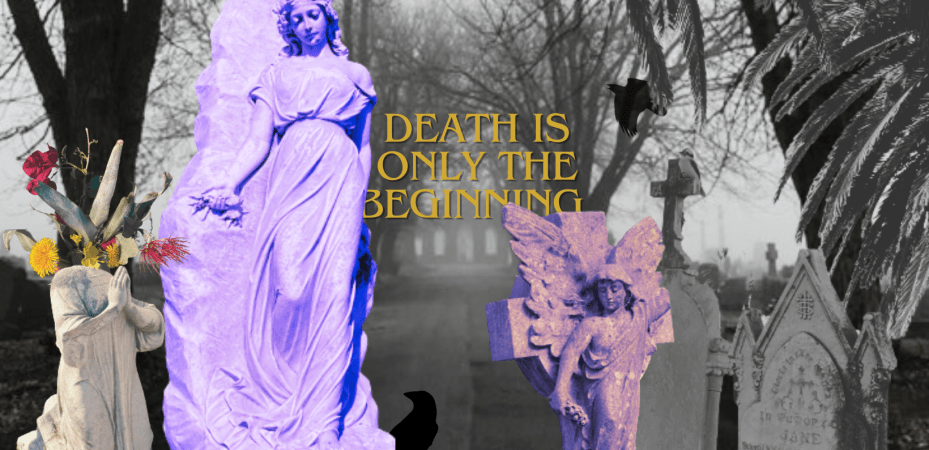
Peaceful yet terrifying, quiet yet crowded; a cemetery can be many things depending on who you ask.
Like hospitals, which often come to represent a place of struggle and sadness, cemeteries bring to mind–well, death. It’s really only in Western culture that that is such a bad thing. We are programmed to be so fearful of what lurks. We pulverize a spider for existing, but something happens when you take a moment to observe it.
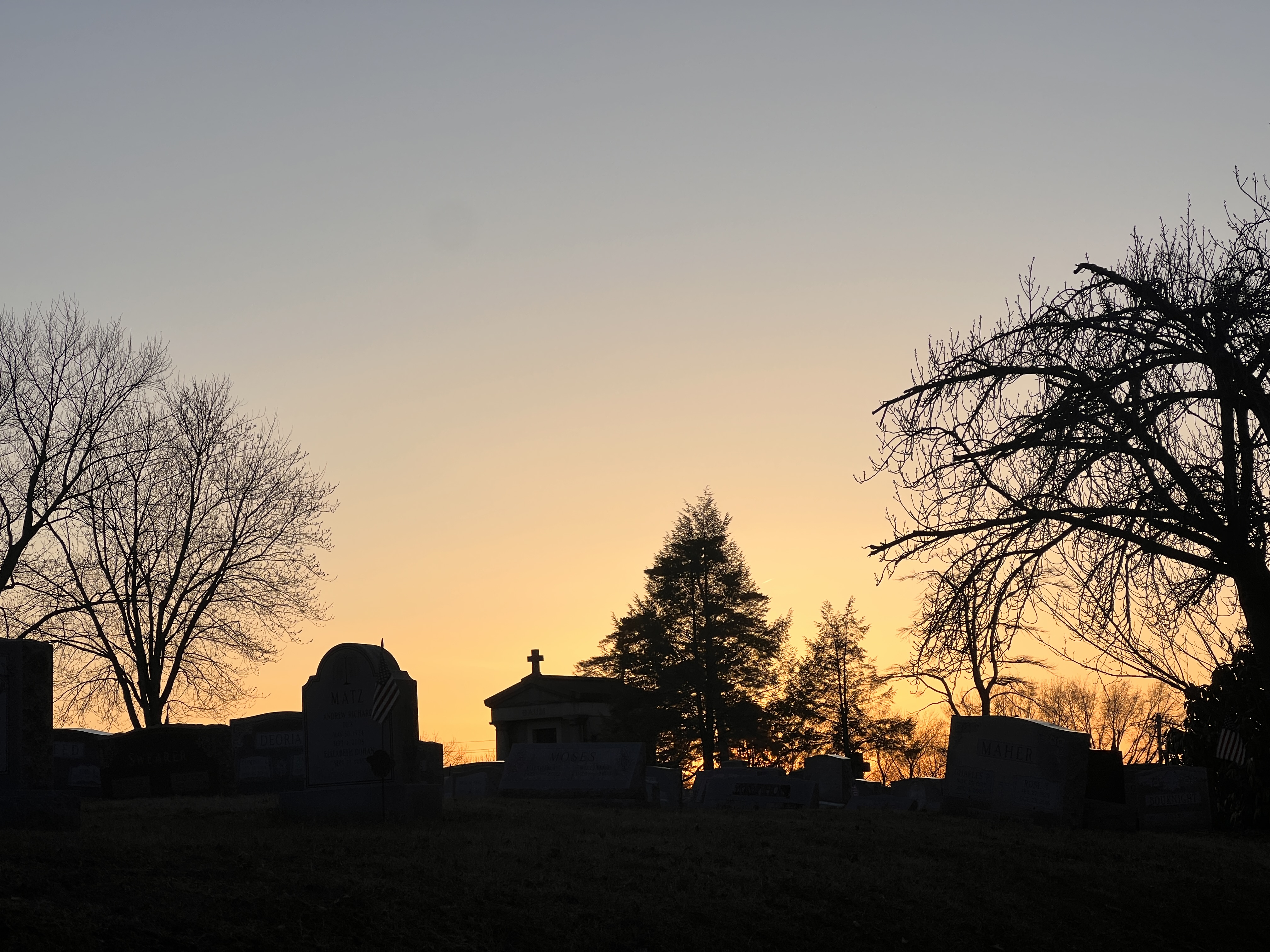
Eastern cultures, like Buddhism, as well as African and Indigenous cultures, all recognize death as beautiful and momentous step of life. They understand it is a natural part of the lifecycle. As such, it’s celebrated.
In Western culture, we build these big beautiful parks and only show up to cry in them. Well, some of us…
Cemeteries around the world
Pere-Lachaise, Paris
For over a decade, I’ve been visiting international cemeteries. As if by force, I was lured by their stories, their beauty. From Normandy to Sydney, I’ve found no two cemeteries are exactly alike. Like cities, they take on the personality of those within them and those who have yet to make their passage.
My taphophilia must have set in at Pere-Lachaise in Paris, where the earth is practically spilling over with the bones of iconic artists.
“The first time I went could not have been a more idealistic time to be present in a centuries old cemetery; cold day with cloudy skies that heightened the experience of the cawing crows. Quite picturesque experience of death.”
2012
The baby-faced Jim Morrison and the concerto legend Chopin are buried there, but I was most star-struck by the grave of Oscar Wilde.

The Irish playwright and author penned the Portrait of Dorian Grey and The Importance of Being Earnest, a pre-slapstick spectacle of a man impersonating another man named Earnest. From this work of art comes my life’s credo:
“If I am occasionally a little over-dressed, I make up for it by being always immensely over-educated.”
After the kiss of Oscar Wilde’s grave, something haunted me, possessed me, and dragged me back to cemeteries around the world.
Waverly Cemetery, Sydney
In my sunny days locked away in Sydney, I was pulled toward the rocks and explored my way up the coastal walk until I discovered one of my favorite yet: Waverley Cemetery.
It sits along a cliff that’s pounded by Pacific waves. It’s vast, rolling with the seaside hills. Lacking in recognizable names, this cemetery compensates in liveliness.

Kookaburras hunt from headstones. Lorikeets flash their colourful wings from between palm leaves. During winter seasons, whales dance in the water, and every season in Australia offers up a rotating selection of wildflowers.
The hilly walk there always laid out a great blooming path for me. After several trips there, I found my groove, my route, my feet mindlessly leading me to the shadow of a mausoleum at the crest of a hill. The family crypt of the Licciardos.
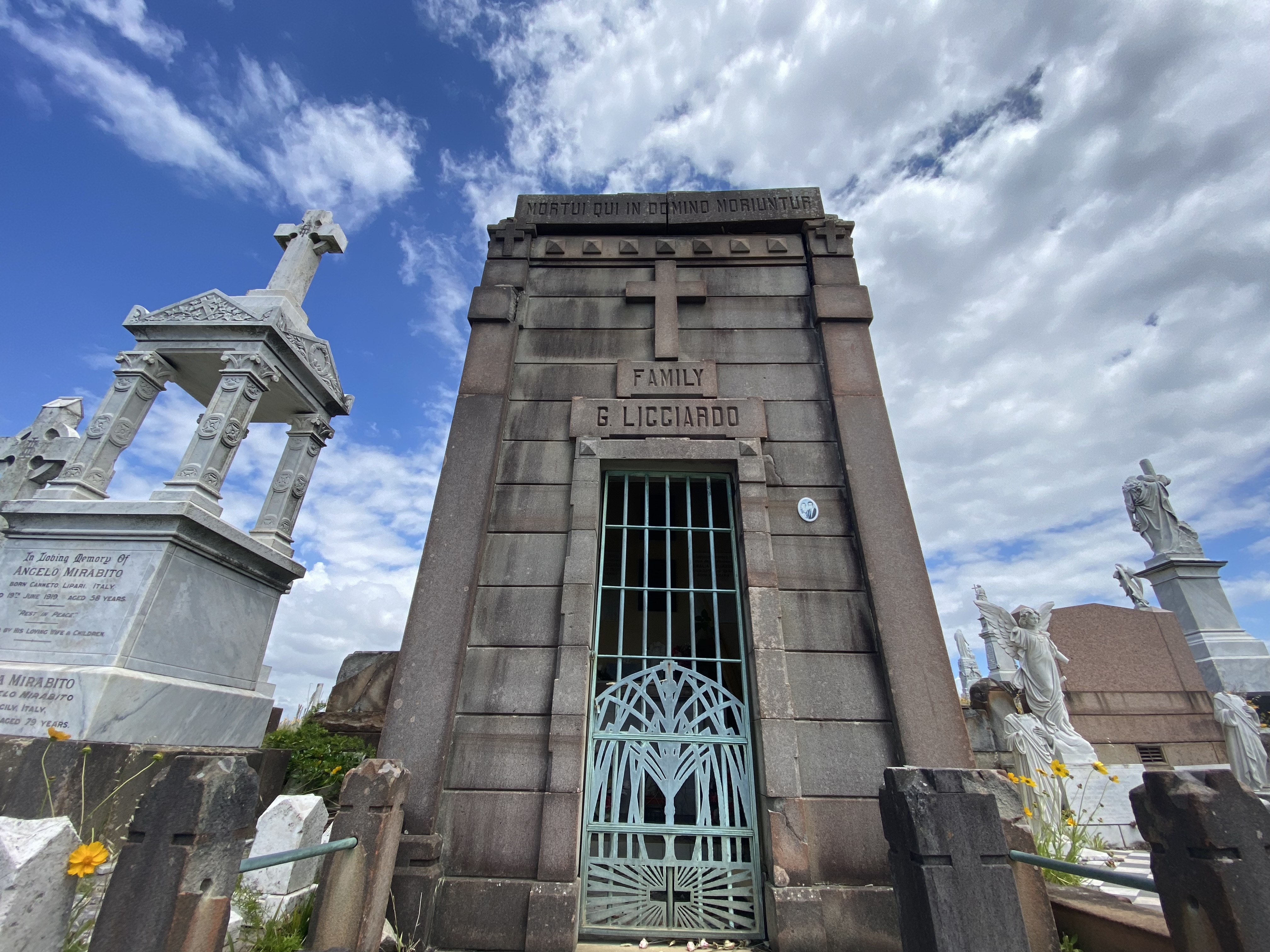
I explored the ins-and-outs of this mysterious crypt like a cat on a scent. These people, clearly from elsewhere, but here to rest forevermore, made me feel oddly welcome. It warmed me that the inhabitants of this sun-drenched crypt, in life, might have been familiar to me through some tradition and custom. They certainly were in their death, like the people I know who sleep in a New York crypt.
Some listed descendants in this Australian crypt had opted to remove the double cc for a g, no doubt an Australian simplification of lengthy lyrical Italian names. It was a common occurrence at Ellis Island, too. Another link to another world.
I took a liking to that spot at the cemetery.
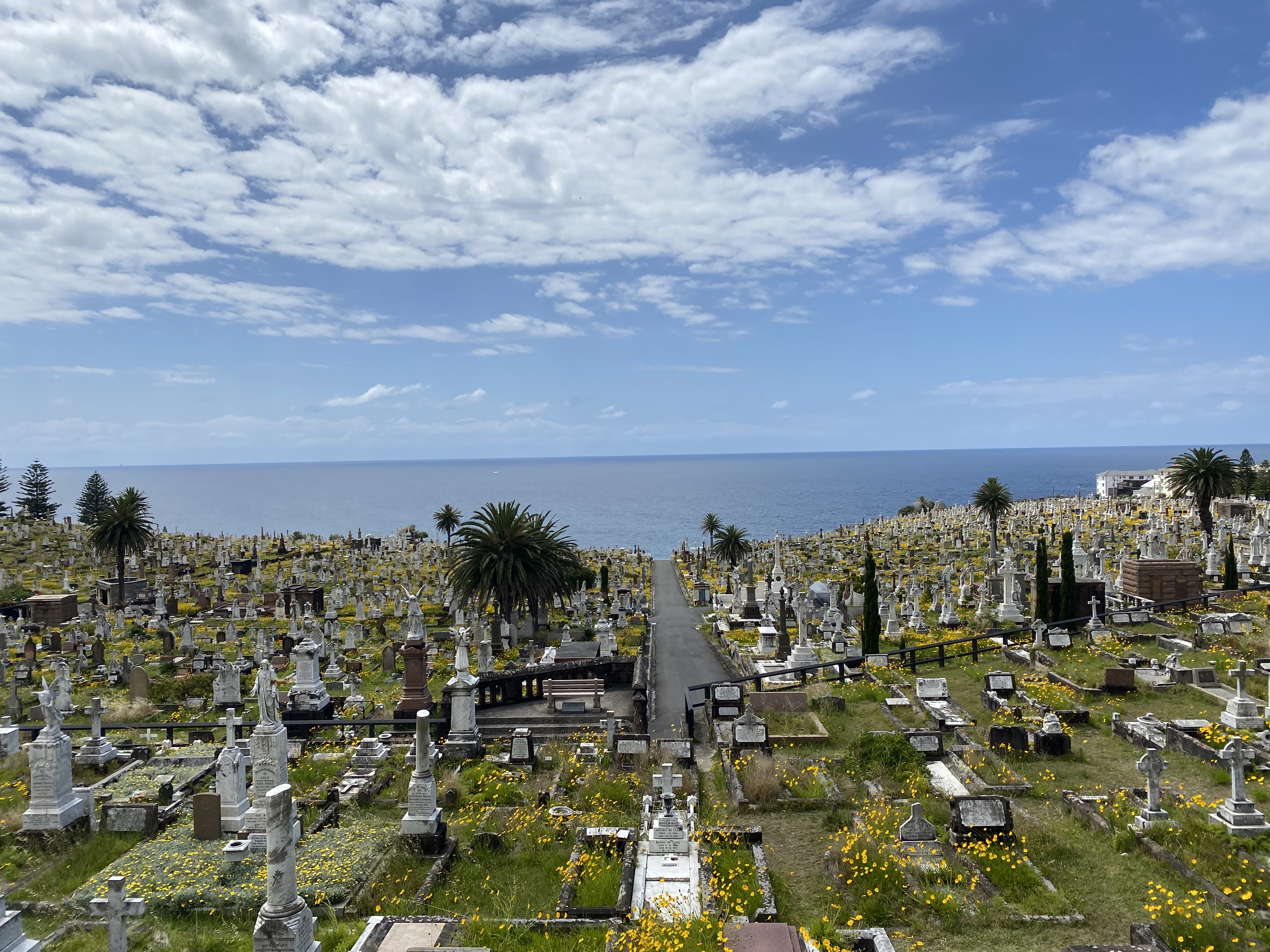
I’d collect wildflowers on my walks, vibrant bouquets to leave at the grave of these strangers. And I’d sit and soak in the splendor of this seaside graveyard.
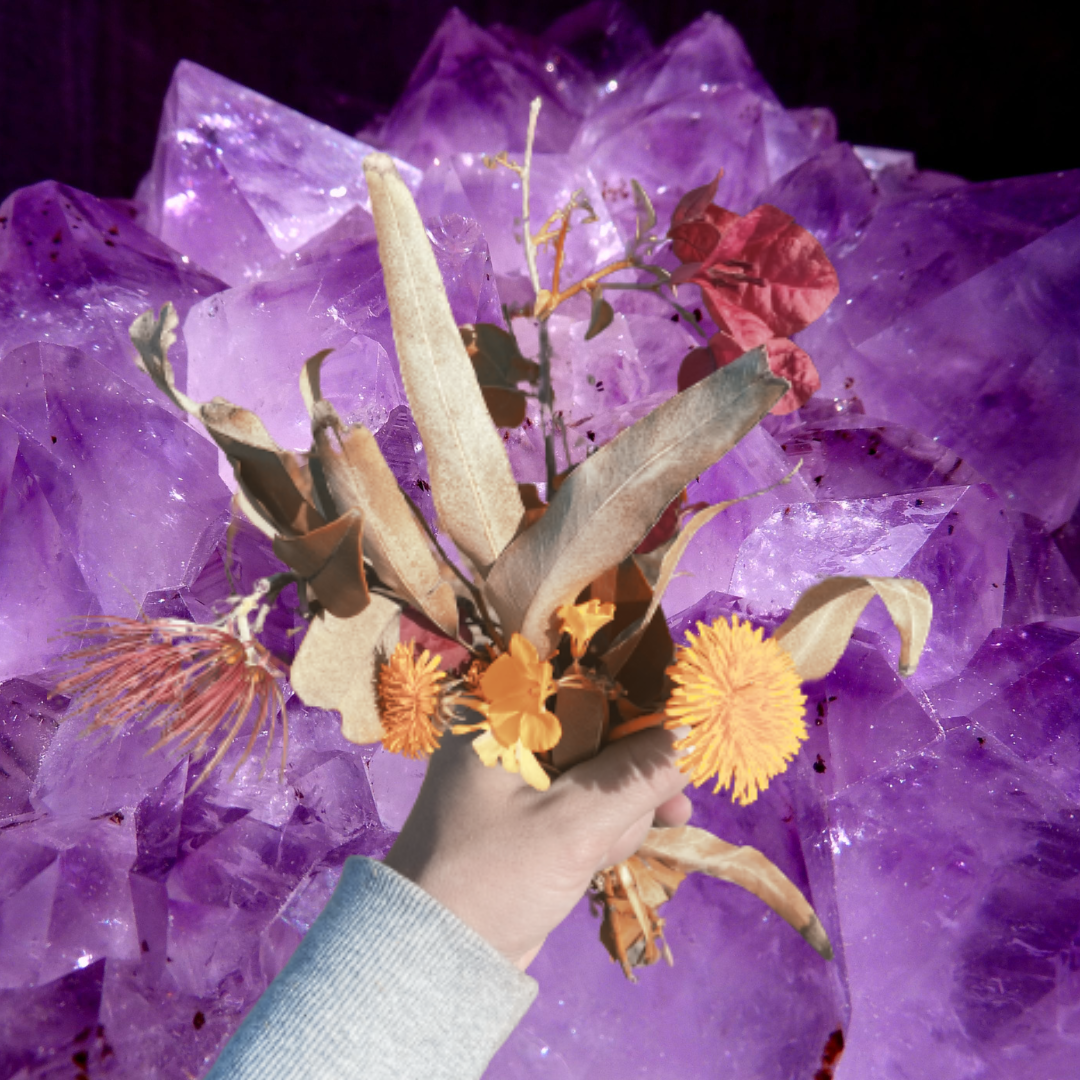
Looking at it then, with the kookaburras preying on lizards and worms, I could feel that sense of “cycle” talked about by the Buddhists, and in Africa, and at Disney World. The circle of life.
These tombstones, monuments to the past, to people who are missed and beloved,–or sometimes better off dead–are an essential part of the story of who we are. You and me, the living and breathing in this moment. Sitting with them can be, as Emma Beddington put it, “strangely uplifting.”
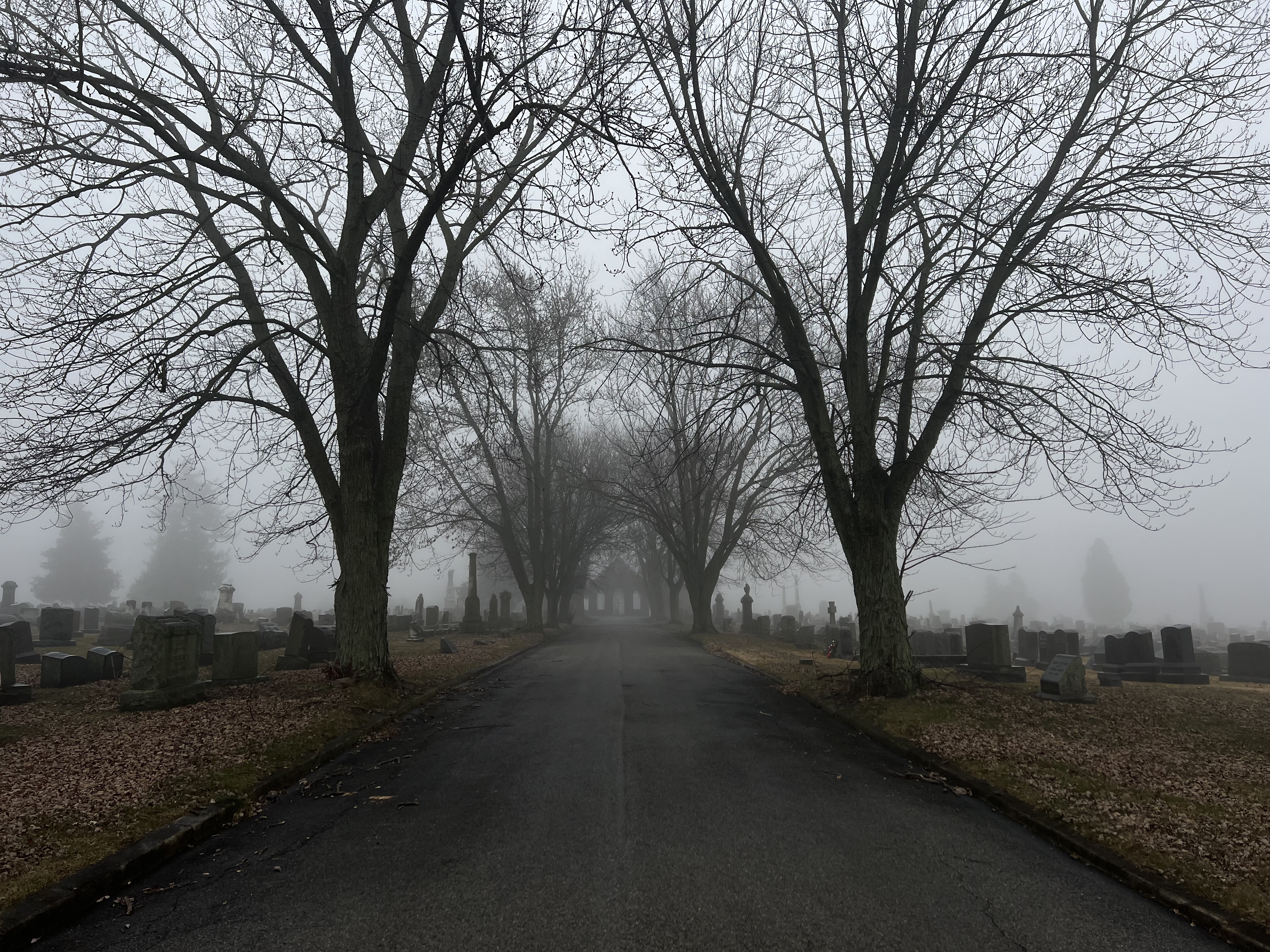
Phoenixville, Pennsylvania
I took Korrie to the local graveyard on a foggy day in late December. Wrapped in the quiet chill of winter. It was just us and all the dead encased in frozen ground.
Surrounded by suburban life, the jagged rows of headstones began to shows shifts in cultural tastes. Gravesites remain a place that sum up a life’s story, yes, but the canvas to do so is getting smaller (unless you shell out the big bucks for it). We’re moving away from the acreage of angelic stone carvings, mausoleums, and headstones. We’re collecting each other in more cost-effective jars and boxes; being “shoved into drawers” and tucked away on a shelf.
“You die, you go to the ground. It’s natural. You go back to the earth. Here, you’re just a mushy bag of bones rotting away for all eternity.”
-Sofia Vergara as Gloria, Modern Family
But these placards, in their simplicity, could still tell a lasting story.
On that dead day in the middle of winter, Korrie and I stood for a few moments at a work-in-progress wall of plots. We noticed a husband and wife, filed nicely together.
HUSBAND, DEAD 1967
WIFE, DEAD 1968
“Aw, died of a broken heart.” Korrie pointed out.
The story still came through with a simple pair of numbers.
And alien tears will fill for him,
inscription on the gravestone of Oscar Wilde
Pity’s long-broken urn,
For his mourners will be outcast men,
And outcasts always mourn.
Where we all end up
In light (and in spite) of these new ways, cemeteries remain sacred little cities of the dead who have lived, died, and loved; a place where we animate mortals can breathe life into the bruised and butchered body below and feel, together, at peace. All this with a little dash of intrigue.
The human spirit has long wondered what happens, fabricated instances of how it all seems on “the other side.” As much as one may believe in their afterlife–a great garden, a sultry harem, a oneness with the ether–none are yet to be confirmed.
Meanwhile, our monuments to death continue evolve. It’s a transformation of the times that keeps us tethered to our long braided human tale. This transformation of modern cultural amalgamations remains our looking glass into the past reflecting directly back on our living world.
A collection of some fabulous graves:
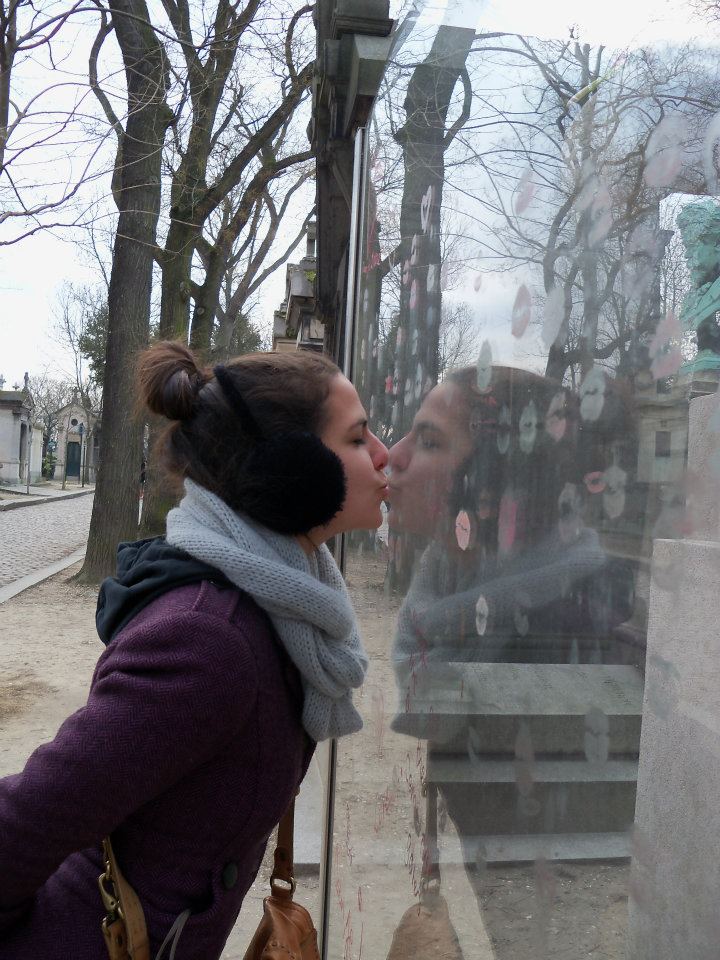
The grave of Oscar Wilde. Pere-Lachaise. Paris, France. 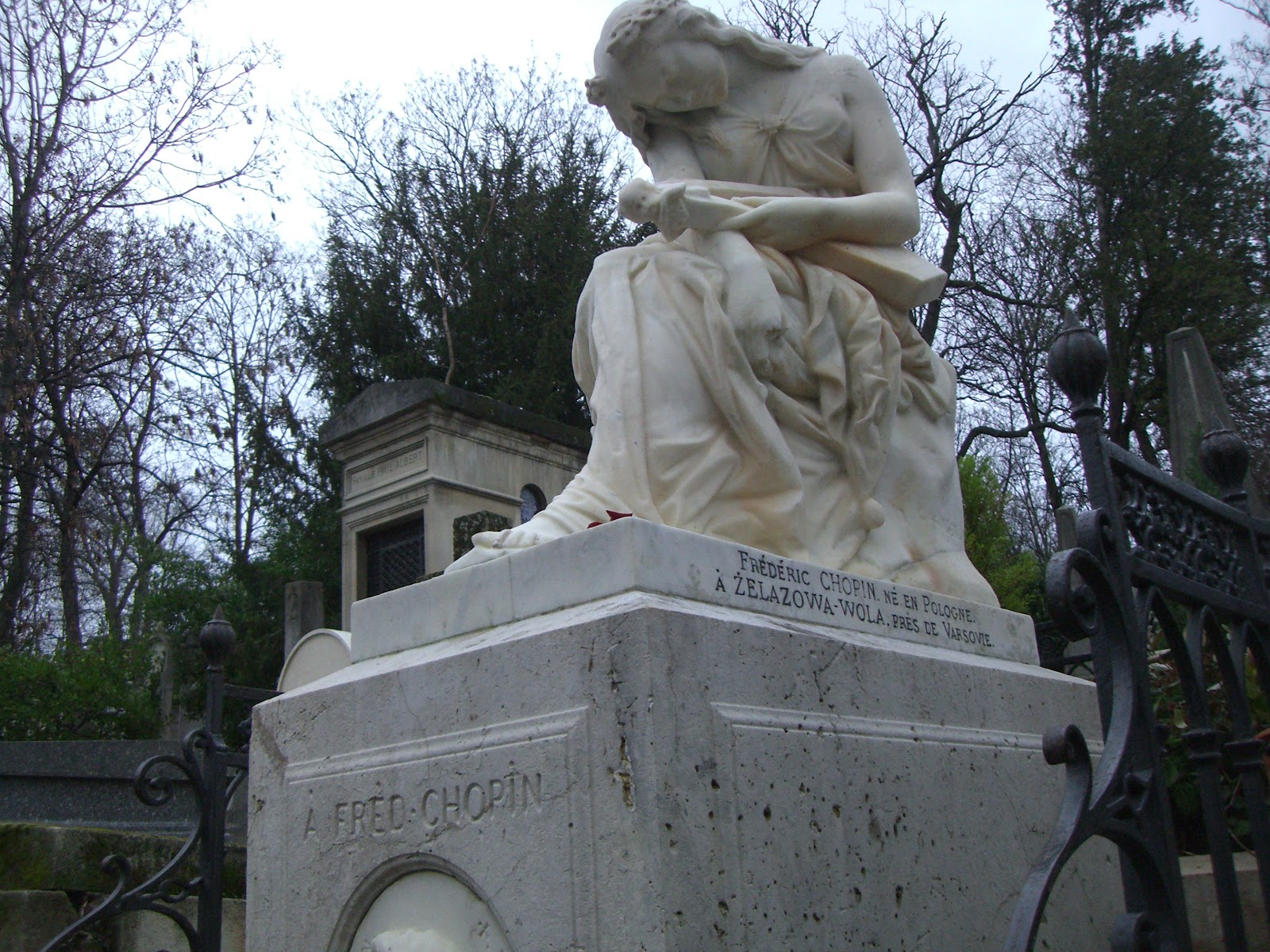
Frederic Chopin. Pere-Lachaise. Paris, France. 
The eventual resting place of Nicolas Cage. New Orleans, Louisiana. 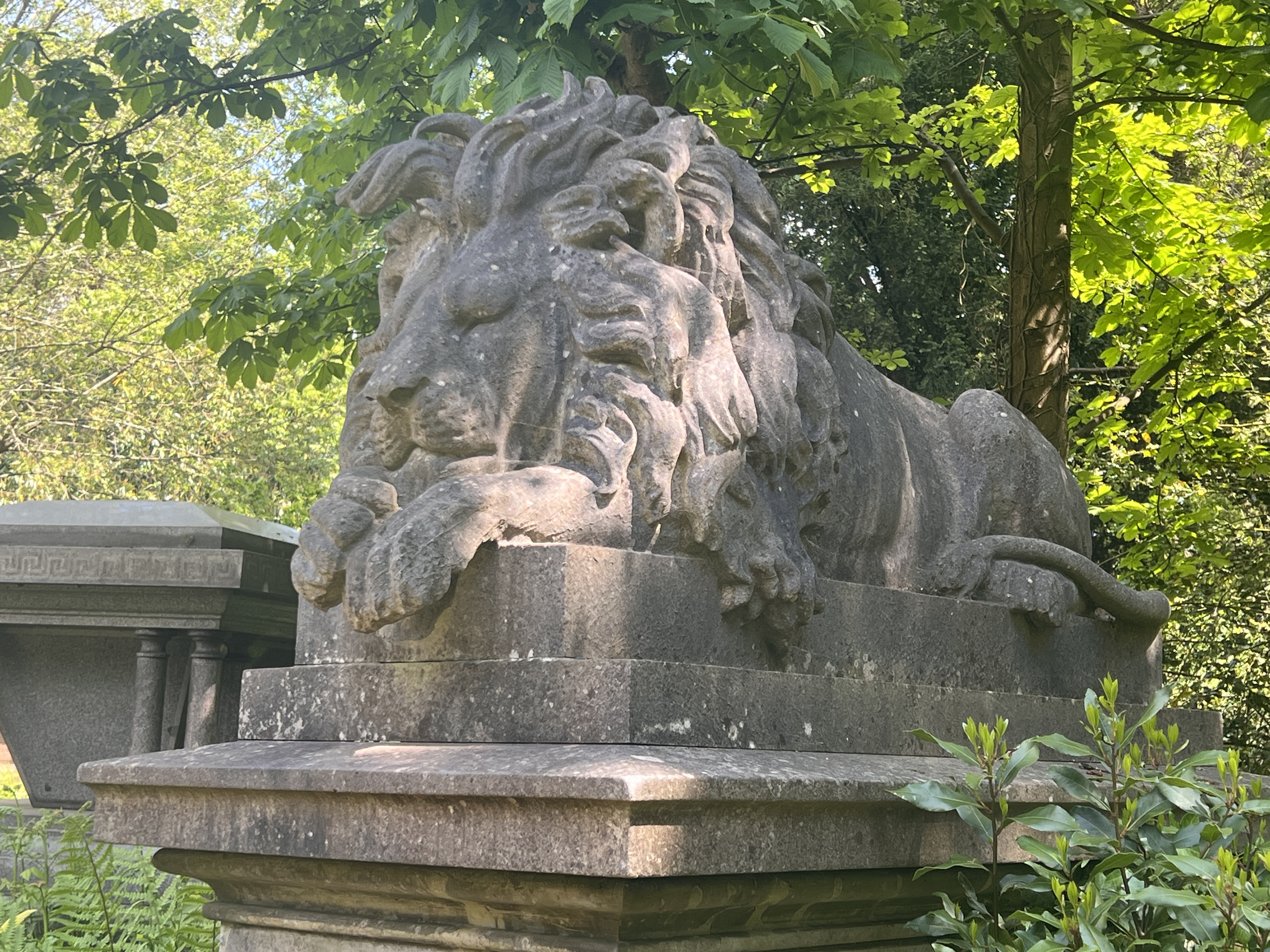
Here lies George Wombwell. “Menagerist.” Highgate Cemetery. London, England. 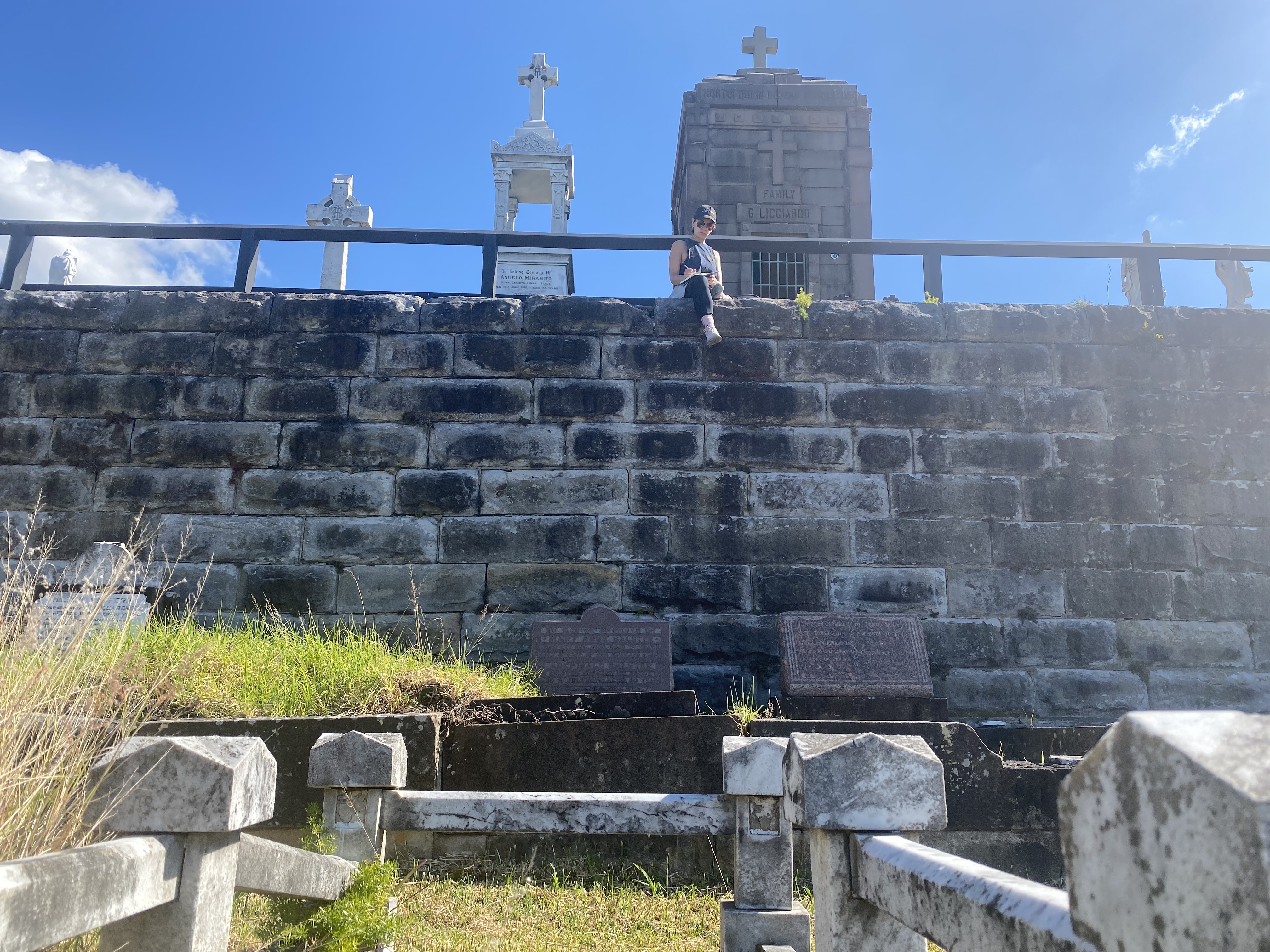
Waverley Cemetery. Sydney, Australia. 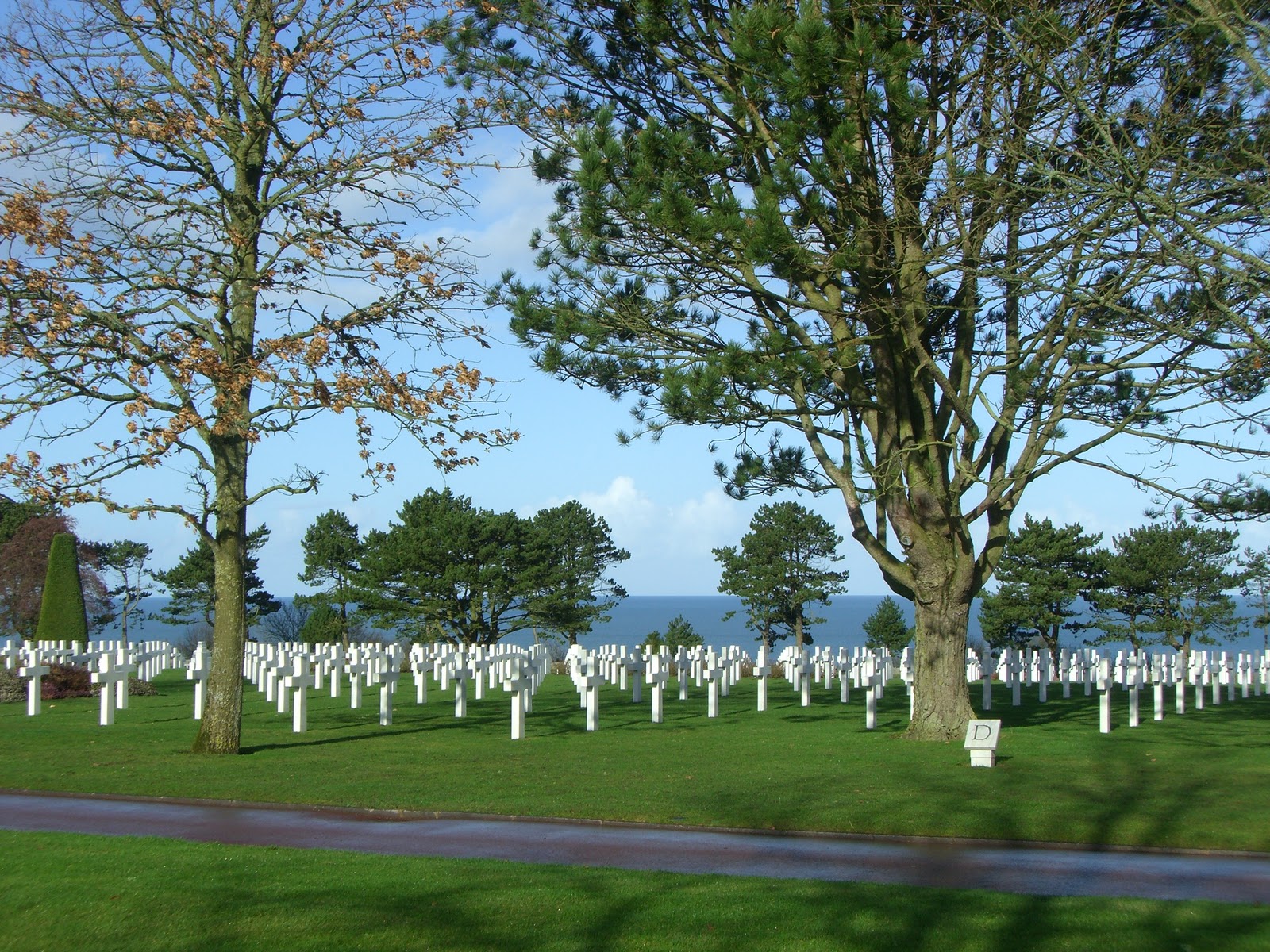
Normandy American Cemetery. France. 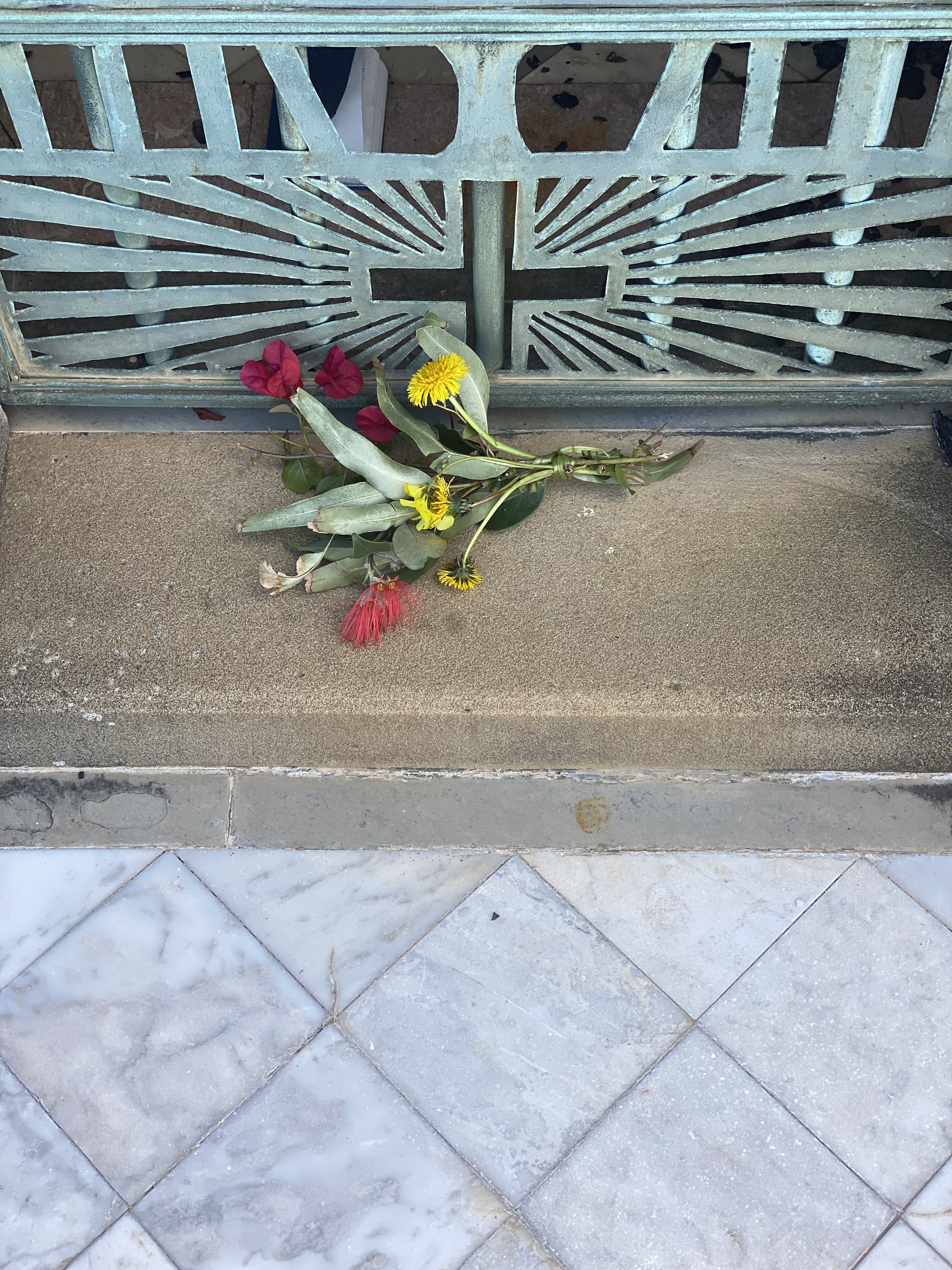
Wildflowers left for the Licciardos. Waverely Cemetery, Sydney.
 tarazine
[…] Be thankful that you’re standing in a room with people who made it. […]